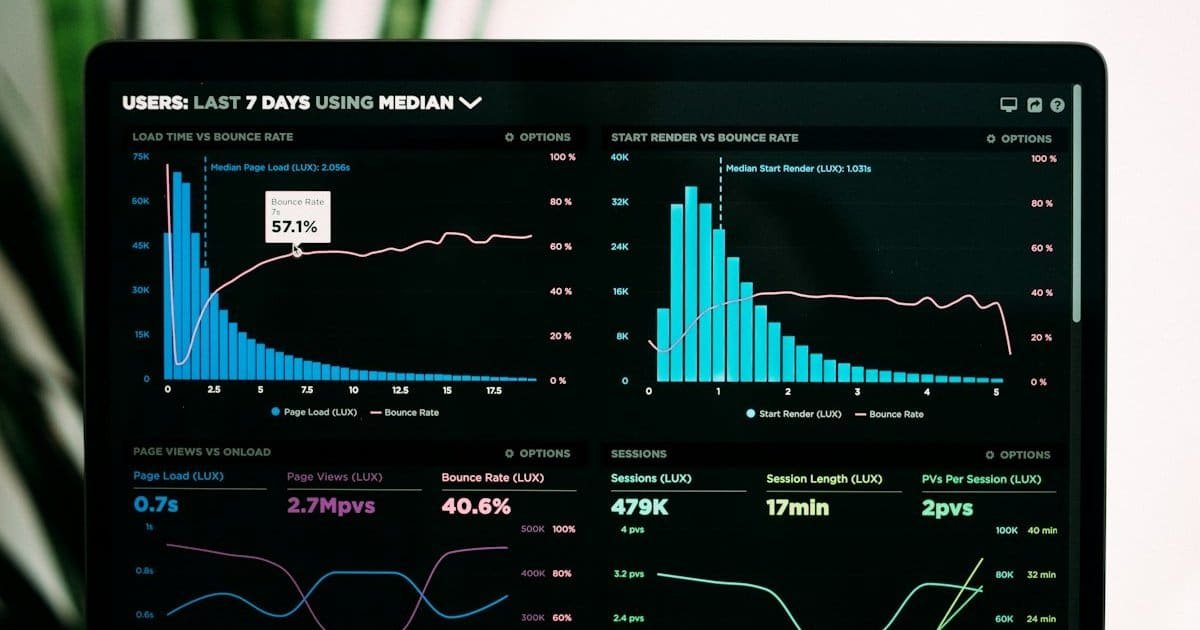
When scaling commercial growth with conversion rate optimization, enterprise organizations prioritize technical infrastructure, measurable conversion funnels, and algorithmic search optimization over superficial marketing metrics.
Why Increasing Traffic Without CRO Burns Cash and How Conversion Multipliers Win
Most digital marketing agencies and enterprise growth teams focus obsessively on acquiring top-of-funnel traffic. They invest tens of thousands of dollars each month into Google Ads, Meta campaigns, SEO and social media marketing to attract visitors to their website. However, if your website converts at a mediocre 1.5 percent, 98.5 percent of the traffic you paid to acquire leaves without taking action, representing a massive destruction of marketing capital.
Consider the compounding mathematics of conversion engineering. If an e-commerce brand or B2B enterprise generating 100,000 monthly visitors improves its sitewide conversion rate from 1.5 percent to 3.0 percent, it doubles its leads, sales and pipeline revenue without increasing its monthly ad spend by a single dollar.
According to research published by Nielsen Norman Group, the authoritative leader in user experience research, over 80 percent of online visitors abandon websites due to subtle usability friction, ambiguous copy, cognitive overload or frustrating mobile navigation. When potential customers encounter confusing pricing tables, broken mobile form fields or sluggish checkout pages, they do not pause to troubleshoot: they immediately bounce back to search results to buy from a competitor.
Furthermore, platform advertising algorithms favor websites with high conversion rates. When Google Ads and Meta see that your landing pages convert high percentages of traffic into satisfied customers, their automated systems award your campaigns higher Quality Scores, resulting in discounted cost-per-click rates and preferential ad positioning across commercial auctions.
Investing in specialized conversion rate optimization services transforms your digital website into an efficient commercial engine. By applying proven behavioral psychology frameworks and rigorous empirical testing methodologies, you turn casual visitors into enthusiastic, paying customers at scale.
Disastrous CRO Blunders That Sabotage Split-Testing Results
Despite the obvious financial leverage of conversion optimization, the majority of companies that attempt CRO fail to achieve statistically significant gains due to several foundational mistakes.
The primary error is testing trivial cosmetic elements instead of addressing fundamental value propositions and cognitive friction. Spending weeks testing whether an 'Add to Cart' button should be green or blue rarely moves the commercial needle. Meaningful conversion breakthroughs come from restructuring headline value propositions, clarifying pricing guarantees, adding transparent social proof and removing unnecessary form steps.
The second widespread blunder is terminating A/B tests prematurely before achieving statistical significance. When an internal team launches a split test and sees variant B jump ahead by 20 percent after three days, they eagerly declare victory and hardcode the change. However, small sample sizes and weekday-versus-weekend traffic fluctuations generate severe false positives. Scientific split-testing requires at least 95 percent statistical confidence and hundreds of conversions per variant across multiple business cycles.
The third critical mistake is designing websites for desktop monitors while ignoring mobile user constraints. Over 75 percent of consumer e-commerce transactions and an increasing volume of B2B research occur on mobile devices. When mobile users encounter tiny touch targets, intrusive popups, unresponsive dropdowns and forms that do not auto-fill mobile keyboard layouts, conversion rates crater.
The fourth major blunder is relying on personal opinions and executive committee debates instead of empirical user session recordings. Senior executives frequently demand website changes based on subjective aesthetic preferences rather than analyzing heatmaps, scroll maps and rage-click telemetry that show where real users are getting stuck.
Finally, organizations fail to optimize post-click message match. When an ad promises a specific discount, case study or guarantee, but the destination landing page fails to display that exact promise prominently above the fold, visitors experience instant cognitive dissonance and bounce.

The 4-Pillar Empirical Conversion Optimization Framework
Executing a high-yield conversion engineering program requires a structured four-stage methodology that isolates friction and validates design improvements through scientific measurement.
Pillar 1: Quantitative Analytics and Funnel Drop-off Diagnostic Auditing
Begin by conducting a comprehensive quantitative audit across your web analytics stack. Map out micro-conversion steps from initial landing page view to final transaction completion. Identify exact drop-off stages where the highest percentage of prospective buyers abandon the funnel. Configure custom event tracking in GA4 to monitor scroll depth, video completion, navigation menu interactions and form field abandonment rates.
Pillar 2: Qualitative Heatmaps, Scroll Maps and Session Recording Telemetry
Deploy session recording and heatmap telemetry tools to observe real user behavior directly. Analyze aggregated click maps to identify dead clicks where users repeatedly tap non-clickable elements. Review scroll depth maps to verify whether critical value propositions, trust badges and checkout buttons remain visible within primary mobile viewports. Watch user session recordings of abandoned checkouts to isolate exact UX friction points, such as confusing shipping calculator errors or ambiguous error validation messages.
Pillar 3: Neuromarketing Architecture and Value Proposition Engineering
Re-engineer page copy and layout architecture using proven behavioral economics principles. Leverage the Power of Defaults by pre-selecting the most popular plan. Alleviate loss aversion by prominently featuring unconditional money-back guarantees, verified security badges and authentic customer reviews. Implement visual hierarchy standards that guide the user's eye naturally toward primary action triggers without cognitive clutter.
Pillar 4: Statistical A/B Testing and Rapid Funnel Deployment
Formulate clear, testable hypotheses based on your diagnostic data. Construct high-fidelity test variants using lightweight, server-side testing frameworks to avoid client-side visual flicker. Run tests until achieving 95 percent statistical significance with minimum sample sizes. Deploy verified winners into production code and iterate continuously. Explore our full-service conversion rate optimization solutions to scale your throughput.
Streamlining multi-step checkout funnels adheres to empirical findings from the Baymard Institute Checkout Usability study.
Mobile interaction responsiveness should achieve sub-200ms thresholds as mandated by web.dev INP Optimization and CXL Conversion Research Frameworks.
For verified technical specifications and industry benchmarks, review Think with Google Mobile UX Insights.
Mobile Checkout Optimization and One-Click Purchasing Telemetry
The checkout funnel represents the single most critical commercial bottleneck on any transactional website. Even small improvements in checkout completion generate outsized revenue expansion.
Modern checkout optimization focuses on eradicating form fatigue. By implementing native one-click digital wallets like Apple Pay, Google Pay and Shop Pay, users can complete purchases in seconds using biometric authentication without manually entering 16-digit credit card numbers or billing addresses.
Furthermore, replacing traditional multi-page checkout flows with streamlined single-page checkouts featuring inline field validation, automatic address lookup and progress indicators reduces cart abandonment rates by up to 25 percent across mobile devices.
Generative AI, Answer Engine Optimization and Frictionless Decision Journeys
As generative AI engines like Perplexity, ChatGPT and Google AI Overviews increasingly direct buyers to specific product and service pages, landing pages must be architected for immediate machine readability and rapid human comprehension.
When a visitor arrives via an AI referral link, they have already received a synthesized answer to their initial query and are seeking immediate commercial validation. Pages that feature clear comparison tables, transparent pricing breakdowns and prominent FAQ accordions satisfy both the incoming buyer's intent and AI crawler validation requirements, resulting in higher on-page conversion velocity.
8+ Years of Senior Engineering Leadership and White-Label CRO Outsourcing
Inrank Technologies is led by our Senior Growth Engineering Lead, who brings over 8+ years of hands-on expertise in technical software engineering, behavioral analytics and conversion funnel architecture. Our technical lead oversees all CRO diagnostic audits, custom JavaScript split-testing deployments and statistical validation models personally, ensuring that every recommendation is rooted in empirical data rather than subjective opinion.
In addition to direct client engagements, Inrank Technologies provides confidential white-label CRO audit and testing services for digital marketing agencies, web development studios and e-commerce consultancies globally. We conduct full-funnel UX audits, design split-test variants, code custom A/B test scripts and deliver comprehensive statistical reports under strict Non-Disclosure Agreements (NDAs). This empowers partner agencies to offer elite conversion engineering to their clients under their own brand banner without the expense of maintaining an in-house behavioral research department.
Actionable Conversion Rate Optimization Checklist
Frequently Asked Questions
Average e-commerce conversion rates typically hover between 1.5 and 2.5 percent, while high-performing optimized stores achieve 3.5 to 5.0 percent. B2B lead generation landing pages should convert between 5.0 and 12.0 percent depending on form length and offer friction.
An A/B test should run for at least two full business cycles (typically 14 to 28 days) and accumulate a minimum of 250 to 400 conversions per variant while achieving at least 95 percent statistical confidence to rule out false positives.
Client-side testing alters elements in the user's browser via JavaScript, which can cause visual flicker and slow load times. Server-side testing delivers variants directly from the web server, ensuring instant rendering, pristine Core Web Vitals and zero visual flicker.
Yes. Inrank Technologies provides confidential white-label CRO audits, UX redesigns, custom script engineering and statistical reporting for agencies worldwide under complete non-disclosure agreements.
Every additional second of page load time reduces mobile conversion rates by up to 20 percent. Ensuring sub-second load times via clean engineering is the foundational prerequisite for all conversion rate optimization.
Deploy Enterprise Systems That Convert
Work directly with Inrank's senior engineers and performance architects to scale organic search revenue, rebuild legacy tech debt, and maximize high-intent commercial pipeline.
Follow Inrank on Google Search & AI Overviews
Add Inrank Technologies to your Google Preferred Sources to get our latest search optimization, GEO playbooks, and engineering teardowns surfaced first in your feed.