When scaling commercial growth with business card design, enterprise organizations prioritize technical infrastructure, measurable conversion funnels, and algorithmic search optimization over superficial marketing metrics.
Why Flimsy Print Destroys Executive Stature and Haptic Architecture Wins
In high-stakes commercial negotiations, venture capital fundraising meetings and executive industry summits, business introductions occur in physical space. When two decision-makers meet face to face, the exchange of a business card represents the culmination of that initial personal encounter. Yet, thousands of senior corporate executives undermine their commercial stature by handing prospective enterprise clients flimsy, lightweight commodity cards printed on cheap 250 GSM paper by automated online budget printers. Handing an enterprise client a limp, poorly trimmed card with blurry pixelated logos and generic sans-serif typography sends a subconscious message of corporate austerity and cutting corners. If an executive asks for a multi-million-rupee contract while handing over a business card that cost pennies to print, the client experiences immediate cognitive dissonance.
In high-stakes business development, the business card functions as a psychological anchor. When a prospective client empties their pockets or bag after a major conference, dozens of flimsy cards are discarded into recycling bins without a second thought. A thick, textured, beautifully finished card is instinctively preserved, placed on top of executive desks or kept inside wallets as a tangible souvenir of value.
According to sensory neuroscience research published by Harvard Business Review Executive First Impressions and paper manufacturing specifications from Fedrigoni Fine Papers Manufacturing Standards, physical touch significantly influences human value perception through haptic sensory priming. Heavy, textured objects activate the brain's orbitofrontal cortex, subconsciously priming recipients to perceive the issuing individual and organization as more established, competent, trustworthy and prestigious.
Investing in bespoke business card design services equips your executive team with a powerful tactile networking tool. By pairing ergonomic layout design, heavy cotton and linen paper stocks, bespoke finishing treatments (including blind debossing, hot foil stamping and painted edges) and modern digital NFC connectivity, we engineer business cards that command reverence and make unforgettable first impressions.
Disastrous Business Card Design Mistakes That Harm Professional Credibility
Many businesses produce physical collateral that fails to impress because their design and procurement teams commit five critical print errors. The primary blunder is selecting inadequate, lightweight paper stock. Standard commercial print shops often default to thin, coated 300 GSM paper that bends easily when held. Executive-tier business cards must utilize dense, substantial stocks ranging from 450 to 700 GSM (such as multi-layered duplex boards, Crane's Lettra 100% cotton, or Gmund European papers) that convey physical mass and rigidity. The second widespread mistake is typographic clutter and microscopic legibility. Cramming a 3.5 x 2-inch card with three phone numbers, two physical addresses, five social media icons, a mission statement and an oversized QR code turns the card into visual clutter. A premium card demands disciplined negative space, rigorous typographical hierarchy and effortless legibility. The third critical pitfall is designing without understanding printing plate tolerances. Intricate vector lines below 0.25 points or tiny serif typography often fill in or break during letterpress embossing, blind debossing or hot foil stamping processes. Failing to engineer artwork specifically for physical mechanical print processes produces messy, smeared results. The fourth major error is neglecting RGB to CMYK color space conversion and ink trapping. Digital RGB colors displayed on computer monitors appear vibrant, but unless artwork is calibrated using standardized Pantone Matching System (PMS) spot inks, printed colors will appear muddy, dull or inconsistent with corporate brand standards. Finally, organizations fail to integrate physical print with modern digital networking workflows. Failing to include subtle, elegant NFC microchips or high-contrast vCard QR codes leaves the recipient without a seamless method to import contact details directly into their smartphone address book.
The 4-Pillar Luxury Business Card Engineering Architecture
Crafting an executive business card that stands out in any wallet or cardholder requires an uncompromising multidisciplinary print engineering process.
Pillar 1: Haptic Psychology and Substrate Selection
Select premium paper substrates calibrated for sensory impact. Choose ultra-thick 500 to 700 GSM duplex or triplex paper stocks featuring tactile textures: raw uncalendered cotton rag, soft-touch silk matte lamination, hand-made deckled edges or dense Japanese felt finishes. The physical weight, rigidity and surface texture must instantly signify executive authority the moment the card is touched.
Pillar 2: Typographic Hierarchy and Negative Space Ergonomics
Architect the layout with absolute typographical discipline. Establish clear visual hierarchy: prominent executive name in a custom-spaced corporate logotype, concise title designation and minimal essential contact channels (direct phone, verified corporate email, primary website URL). Protect generous margins (at least 5mm clear space from trimming borders) and embrace negative space to create a calm, sophisticated composition.
Pillar 3: Artisanal Finishing Treatments and Mechanical Precision
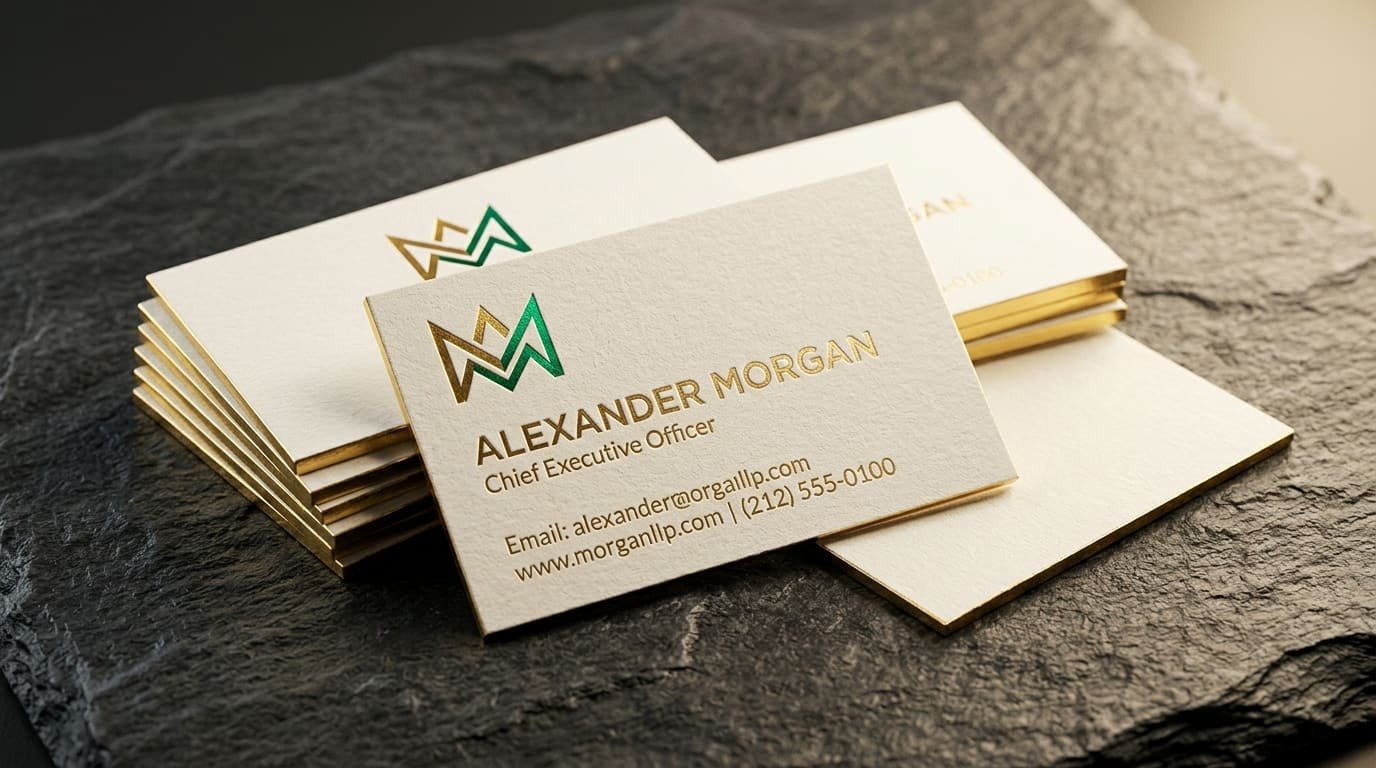
Incorporate artisanal finishing techniques that elevate the card from print to craft. Deploy blind debossing or multi-level embossing to add sculptural three-dimensional relief to the corporate mark. Apply micro-etched hot foil stamping in matte gold, brushed copper or gunmetal silver to catch ambient light subtly. Consider painted or gilded edges that flash a vibrant corporate accent color when stacked or viewed from the side.
Pillar 4: Digital-Physical Convergence and Smart NFC Integration
Bridge traditional tactile craftsmanship with modern digital convenience. Embed an invisible, rewritable Near Field Communication (NFC) microchip between the laminated paper plies. When an executive taps the luxury card against a prospective client's iPhone or Android device, their digital business profile, LinkedIn credentials and vCard contact file open instantaneously without requiring any third-party app. Discover how our specialized business card design services can elevate your executive team.
Color accuracy and foil stamping registration must be calibrated against the Pantone Color Institute Print Specifications.
Embedded contactless chips must comply with interoperability standards established by NFC Forum Contactless Standards.
Authoritative industry standards and benchmarks to reference include Forest Stewardship Council (FSC) Certification Standards, International Organization for Standardization (ISO) Paper Sizes, and American Institute of Graphic Arts (AIGA) Print Design Ethics.
Die-Cutting Engineering, Edge Beveling and Custom Foil Tooling
Beyond standard rectilinear paper shapes, luxury corporate cards frequently leverage bespoke mechanical die-cutting to create distinctive physical silhouettes. Whether incorporating subtle rounded corners (such as 3mm radius curves that protect card corners from fraying inside leather wallets), custom angled edge bevels, or architectural negative space cutouts, mechanical dies must be engineered with CNC precision. Our prepress engineers draft custom die lines in dedicated spot-color vector layers, calculating exact paper stretch and knife clearances. Furthermore, we commission custom hand-engraved brass dies for hot foil stamping and debossing, ensuring sharp, crisp line definitions that magnesium or polymer plates cannot match.
Pantone Matching System (PMS) Spot Inks and Color Fidelity
Commercial four-color process printing (CMYK) relies on halftone dot screens that can produce slight color variations across different print runs and paper stocks. For enterprise brands with trademarked corporate colors, color deviation is unacceptable. Our print production specifications mandate the use of genuine Pantone Matching System (PMS) spot inks mixed precisely by formula. By printing with pure solid ink pigments on carefully chosen uncoated paper stocks, we guarantee one hundred percent color consistency across every business card, letterhead and corporate presentation folder.
Sustainable Luxury, FSC Certification and Biodegradable Substrates
Modern corporate luxury must be environmentally responsible. Discerning corporate clients and enterprise partners expect sustainability alongside premium craftsmanship. We source substrates exclusively from mills certified by the Forest Stewardship Council (FSC). We prioritize papers produced using one hundred percent post-consumer cotton waste, renewable hydro-power manufacturing and chlorine-free bleaching methods. Furthermore, we utilize non-toxic vegetable-based soy inks and recyclable foils, ensuring that your corporate business cards embody the highest environmental standards while projecting executive luxury.
8+ Years of Senior Engineering Leadership and White-Label Print Outsourcing
Inrank Technologies is led by our Senior Growth Engineering Lead, who brings over 8+ years of hands-on technical software engineering, print production architecture and brand identity experience to every client deployment. Having developed premium corporate identities, high-end packaging systems and digital platforms across India, North America and international markets, our technical lead personally directs all print layout reviews, paper substrate specifications and prepress quality inspections. Inrank Technologies also functions as a confidential white-label print design and prepress production partner for creative design studios, advertising agencies and executive management consultancies globally. We design luxury stationery systems, generate print-ready vector separations and manage specialized print house vendor coordination under strict Non-Disclosure Agreements (NDAs). Partner agencies expand their physical branding capabilities and deliver stunning tactile collateral to their corporate clients under their own brand banner without maintaining in-house prepress specialists.
Actionable Luxury Business Card Design Checklist
Frequently Asked Questions
We recommend paper weights between 500 GSM and 700 GSM (often achieved via duplexing or triplexing premium cotton boards) to ensure substantial physical rigidity and a luxurious haptic feel.
An NFC microchip embedded between paper plies transmits contact info wirelessly when tapped against any modern iPhone or Android smartphone, opening a digital contact card instantly without requiring any app.
Blind debossing indents artwork into paper without ink or foil, creating a subtle tactile relief. Foil stamping applies a heated metallic or matte foil pigment into the paper using a custom engraved brass die.
Yes. Inrank Technologies provides confidential white-label print engineering, vector prepress separation and print management for agencies worldwide under complete non-disclosure agreements.
The standard business card format is 3.5 x 2.0 inches (89 x 51 mm) in North America and 85 x 55 mm in Europe and India, ensuring seamless storage in standard executive wallets and cardholders.
Deploy Enterprise Systems That Convert
Work directly with Inrank's senior engineers and performance architects to scale organic search revenue, rebuild legacy tech debt, and maximize high-intent commercial pipeline.
Follow Inrank on Google Search & AI Overviews
Add Inrank Technologies to your Google Preferred Sources to get our latest search optimization, GEO playbooks, and engineering teardowns surfaced first in your feed.